Monday, February 20, 2012

Low Hanging Fruit: Why Technology in Our Schools is a Matter of Equity

AttributionNoncommercialShare Alike Some rights reserved by ax2groin

by Sean Wheeler

There are things that we could be doing for kids that we are not.  And more importantly, there are things we should be doing for our students that we are not.  I'd like to look at two relatively easy uses of technology that would go a long way towards helping two distinct subgroups of students in my district, and at the same time, would push our staff deeper into adoption of technology as a way to provide equity in our classrooms.

English Language Learners

I work in a district that serves a variety of English language learners.  There are close to twenty-five languages spoken in our district, and many of our students have been in the country for fewer than two years.  Needless to say, they aren't faring very well on our annual state assessment, the Ohio Graduation Test.  This year, our district has identified improving the education of these students as a major goal.  However, after six months of this intense focus, little has changed in our district that would point to any sort of real improvement in how we are working with our English language learners.  Our main ELL teacher, a colleague of mine that I really admire, recently spoke up with a tone of frustration at a staff meeting and asked for any kind of help that we could offer her students.  I started poking around online, and found something that I think could help, but it's going to have to be adopted school-wide, maybe district-wide, and the only way we're going to get that done is to tell the right story to our staff.

One of the problems confronting our ELL students is that they have trouble translating assignments in their core classes (LA, Math, SS, Sci) and conversing with their teacher.  Even if a student manages to translate the assignments and complete the work they miss out on getting good feedback from their teacher due to the language barrier.  We can't have every teacher learn every language spoken in our school and we can't expect students who have been in the country for a very short time to be able to have these detailed learning conversations with their limited English.  But what if we could find a way to take a teacher's worksheet and make it readable by the student in their native language?  What if every student had a translator with them throughout the school day who could help the students get the feedback that they need, as well as allow the students to ask questions and participate in class conversations? Would it help and could we get our district to do it?  Before I get to the answers, I want to examine a different issue with a different subgroup of our students.

Special Education Learners

My district has also identified our special-education learners as a main focus for this year.  Again, this focus is prompted by a perceived need to raise test scores.  I have found that our special educators are a dedicated group that really fights to help their students, but they face a good deal of frustration in enlisting the full support of the rest of our staff in inclusion settings.  As a result of their disability, many of the special-education learners in my classes struggle with organization, long-term memory, and follow-through.  These issues lead towards a learning minefield, a seemingly endless cycle of lost papers, forgotten due dates, and incomplete learning tasks.  Our response to these problems has mainly involved having students organize their backpacks and carry around a planner that gets signed by the teachers.  Of course the planner always winds up lost, but at least we gave it a shot.  

The Low-Hanging Fruit

If we digitized our classrooms, we could go a long way towards helping each of these two groups of students, and help the rest of our student population as well.  In this instance, I'm not saying that teachers need to adopt digital learning and jump to blended-instruction, mastery learning, or problem-based projects.    Though I think all of these would also help, I'm thinking on a much smaller scale and much more about equitable access to teachers and instructional material.  

To go back to our English Language learners, what if we did provide each student with a translator?  I recently checked into the Google Translate and this seems like something that could easily be used to aid in the communication between teacher and student, student and assignment, and involve ELL parents in the process as well.  While several of our students speak languages not currently used in Google Translate, it could really help to serve the majority of our students who do speak languages recognized by the software.  I envision a situation in which students could copy-and-paste assignments into Translate and get them translated into the students' native languages.  Students could compose their responses either in English or their native language, and then copy-and-paste them into Translate for proofreading and/or translation into English.  Teacher comments and student questions could be conducted via email or instant messages with Translatete working on either end to facilitate the conversation.  This is something that can't be done with hand-written or photocopied paper assignments.  Those assignments would need to be scanned into a digital version that could be text-edited, and all assignments would need to be hosted online where students could easily locate them.  Students would also need regular access to the internet in school, and would most benefit from a handheld device (phone, iPod, tablet, netbook, laptop, etc.) with online connectivity.  These are both hurdles, no doubt, but they are not walls.  If we want our ELL students to thrive, and we feel that they deserve access to course materials, the ability to engage in classroom conversations, and to receive meaningful feedback from their teachers, than we can take the step of learning how to work with these digital tools.

Posting all student work and feedback digitally would also work towards helping our special-education students overcome several of the key barriers mentioned earlier.  An assignment isn't lost if it's also located online.  A due date is rarely missed when it is programmed into their digital calendar, complete with weekly, daily, and hourly reminders.  Students rarely forget class content when it is always accessible via a link, a video, or a set of class notes posted online.  If digitizing class content affords equitable access to tools that help our students overcome some of the affects of their disabilities, isn't that what we should be doing?

Every student in my district would benefit from having these tools available as well.  My fourth grader regularly loses the hand-out that holds his daily-journal assignments for the week.  When this happens, my wife and I are at a loss to help, and my son frequently has to stay after school for not doing his journal writing because we couldn't find the assignment.  It sure would help us if we could go online and look up the assignments, just like we do everyday when we go online and decide if our child will pack or buy his lunch by consulting the online lunch menu.  It would be fantastic if our students were not limited to learning from materials printed only in English.  Google Translate has helped me to read Brazilian literary reviews, Arabic-language tweets, and Norwegian song lyrics.  My students can now communicate via blogs and messages that are written in a wide variety of languages and with people who would be otherwise unreachable due to language barriers.  And all we'd have to do is teach teachers to take what they're doing and post it online.  It would open the door to our teaching and learning in a way that would be truly transformative.  I'm pretty sure that even the most technology-challenged of us could take this step in much less time than it's taken the district to do anything else that we've tried.

Eric Sheninger recently spoke at the eTech Ohio conference, and he said something that really hit home with me.  He said, "I'm not looking for buy-in, because I'm not selling anything.  It's an expectation that we should have, that we will do what we can do because it's the right thing to do for students."  I think this is one of those things;  easy to do and for the right reasons.


Thursday, January 19, 2012

To Anyone Looking to Get Into Teaching: Stay Right Where You Are, and Keep Going.

by Sean Wheeler
photo by flickr user Rickydavid

I'm fortunate to know and work with a growing list of pre-service teachers.  Whether they are just getting into their first education classes, or about to enter their first day on the job, they all have an expectation that their life is about to change.  They occupy a unique mid-position between being a student and being a teacher.  They're a bit of both and not wholly either.  This post is addressed to them.

First of all, thank you.  Thank you for taking the time to really think about teaching and learning.  Hopefully your classes are great, your professors are amazing, and your classmates are as excited about all of this as you are.  I hope you have had the opportunity to be engaged by different teaching philosophies, to sort through your own educational experiences and beliefs, and have begun to develop your own approach.  It's going to be great.

As I said, you occupy a great place in your life right now.  But most importantly, you are at a moment in which you occupy two distinct positions within a framework that will come to dominate the rest of your career.  The difference between being a teacher and being a student will hover over everything that your class will accomplish or fail to accomplish every day that you walk in the door.  The tendency, I think, after awhile, is to walk in that door more as a teacher than as a student each time you do it.  The gulf between student and teacher, which in the case of the pre-service teacher doesn't exist, tilts increasingly towards the latter as we get more comfortable with "the way things are" and "what we do".  It happens.

But I'm challenging you to go a different route.  When you end your time as a student-teacher, try to forge an identity as a student/teacher.  This is less about seeing the world through the eyes of your students, and more about seeing the profession of teaching from the perspective of a student studying teaching.

Right now you are wondering whether or not it's going to work like you hope it will.  You are open to suggestions, willing to learn, keenly observant, and eager to work with your students.  Stay that way.  Don't lose that critical eye, those thoughtful ambitions.  Be a bit bold and ready to take on the challenges and rewards that this amazing field is going to bring your way.

It really is more hard than easy.   There's something alluring to being up front and in charge.  There's a great comfort in teaching what we know in the way that we know it.  After the first few years things start to become more automatic.  You get used to being referred to by your last name.  You begin to rely less on what you've recently learned and more on what your experience shows.  Change, of all things, starts to slow down to an easy series of minor adjustments and begrudgingly approached initiatives.  It's been the typical trajectory of every generation of teachers that have come before you.  We start eager, we find our niche,  and we settle in to a series of oscillations that move between the beauty of learning and the frustrations that stem from seemingly everywhere.

I'm hoping you begin to swim the other way on this trend.  You are living in the midst of one of the greatest revolutions in human capacity for learning and thought that has ever existed before.   You know this.  You've been told it all of your lives.  The only thing that we now know for sure is that we're in for some big changes in the way the world operates.  And education, now more than ever, is in dire need of some serious reflection, criticism, and enthusiasm for the unknown challenges that lie ahead.  Anyone going into education right now is going to have a career that will necessitate an expectation that change is going to be a constant.  The new information and communication landscape is wide-open, and if we're going to succeed as a profession, we're going to need you.  We're going to need you to keep being a student as much as you are a teacher.  Keep the distance between learning and teaching at a minimum, and move forward through your career ready to learn, grow, and embrace new ideas and ways to do things.  Let people see you learn.  Let them teach you as well.  Keep working on your voice.  Just like now.

Stay right where you are, and keep going.


Sunday, December 11, 2011

Trusting the Process, and the Processors


 by Julie Rea

Teaching the humans we have in our 9th grade classrooms this year has been challenging.  They are masters at disengaging, “forgetting” assignments, logging time at school until their real lives start.  Failing a class is a non-event for them, to be met with a shrug of the shoulders.  A majority of our students are satisfied with doing just enough work to pass and keep their parents and teachers off their backs.  It has been very challenging. 

We have been introducing project-based learning, and struggling to teach the students how to participate in and contribute effectively to groups.  In geophysical science, my co-teacher just introduced a unit on Newton’s Laws with a project on forces in sports.  Students are to answer the question:  How can we use forces to improve an athlete’s performance in hockey, baseball, rugby (the sport of their choice)? 

On Friday, I went to the science room to help the groups as they worked.  The situation looked promising as I walked in the room.  Students were in their groups, and there seemed to be lots of discussion.  Full disclosure here:  I am an external processor.  I do not know what I think until I have said it.  To me, discussion is a good sign.  One group of students caught my eye:  two boys were standing, and two girls were sitting, everyone looked glum, and no one was saying a word.  To me, this is not a good sign.  Deep breath and approach: 
How’s it going?  
Ok.
What sport did you choose?
Basketball.
What is your question?
We can’t think of one.
Hmm.  Do any of you play basketball? 
(one student raises her hand.)
Great!  So what area of your game would you like to improve?
I don’t know.
Let’s think about all the parts of basketball—what do you have to do to play basketball?
Dribble.  Shoot.  Be fast.  Be agile.
Good!  So dribble, shoot, run—which would you like to study?
(Silence.)
There are different kinds of shots in basketball.  Which is the most interesting to you?
(Silence.)
Well, I’ve always wondered why so many pros are bad at foul shots.
(Silence.)
Ok, so are you thinking in there?  Are you all internal processors?  Am I bothering you with my questions?  (I am related to some internal processors, and they have shared that, at times, talking is an annoyance.  I sympathize, but cannot empathize.)
(Silence.)
Well, I’ll let you process those thoughts, and I’ll be back.  

5 minutes later. . .No one has moved, everyone looks glum, no one is talking.
             How’s it going?
             (Silence.)
Got a question?
No.
Hmm.  You could always think about equipment in basketball.  Hey, I know.  I always see players rubbing their shoes before they go on the court.  Wonder why?
To get the dirt off (this is followed by a look which says, Do you have a brain?)
Well, maybe forces play a part in that.  Can you think which ones?
(Silence.)
You might want to look at your notes, or on-line to see what forces might be involved.
(Silence.)
Well, I’ll let you process those thoughts, and I’ll be back.

5 minutes later. . .No one has moved, everyone looks glum, no one is talking.
             How’s it going?
(Silence.) 
Got a question? 
No.
             Hmm.  Well, I was thinking about that shoe thing.  (I am getting desperate now.  The project guidelines say that they must have a question by the end of the period.)  My son played basketball in high school and college.  You know, in college the team buys your shoes for you, and one year my son was really disgusted with the shoes the coach had picked out.  No one on the team would wear them.  Can you imagine why?
            (Silence.)
            They said they were too heavy!  Do you think shoes could really make a difference, like in jumping?
            (Silence.)
            Ok, well, you process some more, and I’ll be back.  (Exchange worried looks with co-teacher.  We have been having similar discussions with other groups, and those groups have been making progress.  We got nothing here.)

5 minutes later. . .three of the students haven’t moved, but they are looking at me expectantly, and the group leader is approaching me where I am working with another group.   She is holding a notebook, and has a look of quiet confidence.  She holds the notebook up, and I read a perfectly wonderful question about forces and the lay-up shot in basketball.  We do a high five, and I say “well done” to the group.  They smile, and the boys finally sit down. 

            Here are my take-aways.

·      Wait Time works.   All those silences up there?  They were big, long, empty silences.   Doug Lemov (Teach Like a Champion) includes wait time as one of the championship techniques.  It can be painful, but it works.  Kids need time to process—my co-teacher and I had already been thinking about and discussing this project for some time.  We were familiar with it; the students needed time to catch up.
·      No Opt Out, another of Lemov’s techniques, works.  I kept circling back to be sure that something was going to come out of this group.  If necessary, we would have been there for some time after class, or after school.  It wasn’t an immediate No Opt Out, but it was in play.
·      Trust the process.  Project-based learning works.  Struggling is part of the process and is good for students—I almost blew it by inserting myself too much in the process.  I needed to let the students struggle, and be patient with the struggle.  Self-esteem comes from struggling and overcoming, not from writing down what the teacher said, however brilliant and insightful that may have been (I thought my shoe question was both!)  The pride on the faces of this group at the end of the process was palpable.  It wouldn’t have been there if we had given them the question—either as part of the assignment, or as they struggled to come up with their own.
·      A group of internal processors can work!  Quite possibly NASA already knew this, but I would never have thought it.   If these internal processors had been in groups with external processors, would they have gotten the chance to cogitate, ponder, wrestle, and finally succeed?  Is this another grouping criteria to consider?  If internal processors benefit from the space to process internally, would external processors benefit from learning how to work in a group in which everyone has to talk to think?  I want to investigate more about how internal processors work, so I can be more helpful to them.  If you have suggestions about resources, or are a self-aware internal processor willing to share, please let me know. 

Friday, November 25, 2011

Creativity, Cycles, and Cowboys

By Sean Wheeler
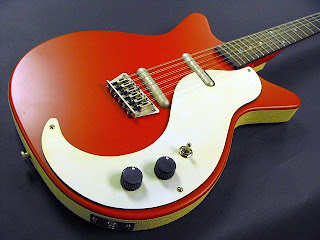
Danelctro Guitar
 I did theater in high school and my first go at college.  Doing a show was a huge creative process that involved tons of creative choices, tremendous team work, and a constant adrenaline kick that started at auditions and peaked on closing night.  For anyone that's done it, being in or working on a play is a life defining experience.  In theater, we call the last week of rehearsals "Hell Week" though it's really anything but hellish.  In reality, it's an extended creative flow that is both exhausting and massively exhilarating. The days immediately after feel almost lifeless and all-to-mundane.

The same goes for playing music.  I've was in bands off-and-on throughout my teens and twenties.  I was never really any good, but I did some good stuff.  And, again, there's nothing like playing in a band when the music hits a point that transcends anything going on in real life and the instruments almost play themselves.  It's also the whole reason anyone who plays music does it in the first place.  Time slows down, individuality merges into community, and the last note is always met with a laughing "wow" and then an exhausted silence.

Athletes, painters, gardeners, craftspeople, all of them and many others go through a similar experience.  Mihaly Csikszentmihalyi's work on "flow" has been tremendously influential in my thinking concerning teaching and my work with The American Youth Foundation at Camp Miniwanca.  As a person who has experienced this sensation through several experiences of my own, I fully believe that the creative act is my most immediate access point to flow.  

Which brings me to the fact that I haven't posted anything for over a month.  Though the school year keeps moving on, and the first big phase of the Wikiseat project is behind us, I've found myself recently in the place that happens just after one of these flow experiences.  A silence, an exhaustion, a letting-out of breath.  Rather than beat myself up over a too-long absence from posting anything here, I've come to recognize that sometimes the silence is needed.  Less needed, than simply real.  It's just the result of doing some great creative work with an incredible group of students.  Everything has it's let-down.  It's a part of the bargain. 


Thursday, October 20, 2011

LHS2.0 WikiSeat Project: Ladies and Gentlemen...

by Sean Wheeler


No way. 

Today has easily been one of the greatest days I've ever experienced in a classroom.  The students did it.  They knocked this one out of the park.  I couldn't be more proud, and to be honest, surprised, at the work that was turned in today.  We had a great time seeing everyone's work.  There were tons of stories to tell, celebrations to be had, and risks that paid off.  In the afternoon we had a chance to talk with Dr. Nicolas Weidinger, the creator of the WikiSeat project, via Skype and it was a perfect cap to a tremendously rewarding day.  There were so many people helping us in this project and we can't be thankful enough to the friends, family members, and colleagues that  shared in the work. Wow!

There's so much to say about all of this, but I'll start by going back to something I included in the first TeachingHumans post on August 15th.  If you're new to following this project, I'd suggest checking out the GoogleDoc that guided my process in teaching the unit.  The experiential learning graphic from that document is really on my mind as I look forward to the next steps.  This is really where the learning is going to sink in and I'm going to be able to gauge what the students are taking away from the project.  


We just did it.  No doubt.  But now comes the "What?", "So What?" and "Now What?" parts.  Nic was great in laying out a few challenges for the students (more about that in the next post), and I have a couple of my own to add.  I am really looking forward to having the opportunity to ask those questions and see what the kids come up with. 

Wednesday, October 19, 2011

What I'd Like Middle School Kids to Know As They Enter My High School Class.

By Sean Wheeler

Foundation Forms Set

My friend Alex, a middle school teacher, asked me what I'd like middle school students to know as they entered our high school classrooms.  While obviously a bit utopian, I was surprised to find myself really talking about foundational, and somewhat predictable, skills.

"1.  "Google It" - I want students entering 9th grade with a sense that they can find anything they want on the internet.  I would love to see students who "Googled" their question before they raised their hand.  It's not that I don't want to help, but I'd love to have students walking in the door who know that they can be their own first resource.


2.  Registering for things and basic internet ability - In 2.0, our students have to register for a pretty wide array of internet services, apps, and accounts.  Our students register accounts for Picassa, Moodle, Blogger, Voicethread, Wikis, Email, DropBox, Google Reader, Google SketchUp, SlideRocket, usually all within the first six-weeks of class.  The more familiarity our students have with setting up and managing internet accounts, the better.  This is even more true for "netiquette".  Issues of internet identity, the permanent nature of internet publishing, cyber-buillying, appropriate use, and civil conduct are significant lessons that we currently teach.  Any help at the middle school level on any of that would be helpful.


3.  Open-source software, copyright, and sharing - As students become not only consumers, but producers, of content, a keen awareness of what's available, what isn't, and what can and should be shared is crucial. This is an area in which our students have a good deal of expertise, and we'd be wise to engage them in these conversations as soon as we can.

4. Back-up everything and have everything everywhere - Our students should be able to access everything they do, wherever they are.  This really stems from the big push for portfolio assessment that you and I heard alot about in college.  The kids need to use cloud computing and services like DropBox to manage their files/portfolio.  Likewise, students should understand that data loss occurs and that they need to take precautions against it.  For example, sometimes students write an email, blog post, or forum contribution and the internet or web service "times out".  At this point, they often come running up to me saying they've lost everything.  Students need to take precautions such as writing everything in Word or GoogleDocs and then copy/paste it into their post or email.  Even something as simple as hitting "select all" and "copy" commands before hitting "publish" need to be taught early on.  If nothing else, it cuts down on student frustration."

Tuesday, October 18, 2011

The Wikiseat Project: The First Wikiseats are in!

by Sean Wheeler

Wikiseat by Analise

It's working.  The first four Wikiseats have come in and the kids are rocking it so far.  The Wikiseat above was created by Analise.  Here's what she said in her Wikiseat Manifesto two weeks ago, just as she was about to actually start real work on the project:

"I have been bullied about being a nerd, most of my life. Yes that's only fifteen and a half years but it wears and tears at you. I like to read, I openly admit it. I like to think of this as being a non-conformist. "Whoso would be a man must be a nonconformist". My friends have always been the ones that say: they hate school, they hate the teachers because they make you do work, they just want to get it over with. When I think of classes and teachers and working, I try to think of the good things and focus on them. Knowing what to look forward to in a lot of things helps get you through the hard things.

In my mind those rules apply to the whole world. You can’t do anything more if you have already given your 100% best and someone else doesn’t like it. “To be great is to be misunderstood”. I learn to get scholarships so I can follow my dream. When families say they're tight on money, cut their money in half, that’s what my family has to do to send two children to college and another through high school with expensive athletics and extra-activities. The chair can help me be more calm, more focused. It can help with my work efficiency with my grades and with my sports. Having little to no extra stress on an already stressful life is a blessing to me. But this is the real world, not a fantasy. Things don’t come easy, and I don’t want them to. I was raised to never except things you haven’t earned. I will not take a grade I do not deserve. This seat project will help because it will be made completely from our hands and in doing so, we have all rights to get the grades based on our work."

Here's David's chair and Wikiseat Manifesto.  It's interesting to note that the form of his idea changed, but the function didn't at all.

Wikiseat by David

"My Wikiseat needs to be mine. Not just a chair that has my name on the bottom of it. I want to make a chair that has so much of my personality into it; you wouldn’t even have to ask who made it. I want to not even have to put my name on the bottom of the chair. And I don’t mean that I’ll paint it my favorite color. I mean that I'll design it in the same way as my art style. I want to put things I like all over it. I love to rock, so I’m making a rocking chair. I don’t want a bland square wood rocking chair. I want to build a chair that would never get mixed up with any chair in the world. My chair will be a nonconformist. It will be more than a representation of my personality; it will have its own personality.  My chair will rock to a different beat than any other chair ever. Yeah, it may turn out completely ugly. But I won’t care. I’ll never care. I’m going to build a chair for me, and I don’t care if you think I could have had a better idea. I don’t care if a rocking chair is a stupid idea. I like the idea, I love the idea, and it will be my utmost greatest creation. I want a masterpiece, and I’m ready to work for it."

Nickolas wrote a great Wikiseat Manifesto and the results really matched up with his intentions.

Wikiseat by Nickolas
"As Ralph Waldo Emerson said in Self Reliance, "There is a time in every man's education when he arrives at the conviction that envy is ignorance; that imitation is suicide". If you were to design a chair by looking and using other peoples designs then what is the point of you building one? There would be no point because you are not trying to stand out or be extraordinary but you are just copying someone else's work. "The power which resides in him is new in nature, and none but he knows what that is which he can do, nor does he know until he has tried." If you just give up because others say that you won't be able to complete or make your chair and you believe them then your not even using your own thoughts. When you think to yourself that you can't do something it is mostly because you are acting lazy and or even trying. When you say that to yourself you just ruin your self-confidence and self-esteem. When you actually try something you will realize that you most of the time can do it even if it takes you a couple tries to do it. "The other terror that scares us from self-trust is our consistency; a reverence for our past act or word, because the eyes of others have no other data for computing our orbit than our past acts, and we are loath to disappoint them." When you just do things to please others you are most of the time not pleasing yourself. Therefore you are not even using you own mind but using others to see how they want you too look or do something their way. If you listen to them all the time then you mine as well not even be there because you are not thinking for yourself but focusing on you peers decisions. If you make a chair that is different but you like it then make it don't let other people say that "your chair is ugly you should throw it away", but don't even listen to them. Do what you want because you will feel better knowing that you stand out in the crowd but are not just another average person like everyone else."

Roy's chair might win for the most solid construction so far.  He really turned in a great looking Wikiseat and I actually used it a bit in class today and can vouch for it's consideration of height and comfort.  Here's his Wikiseat and what he wrote in his Wikiseat Manifesto.

Wikiseat by Roy

"Thinking about "Self Reliance" by Ralph Waldo Emerson helps me with my chair that I'm making. If someone tells me I can't do it, I won't listen to them. I'll still try. Or if someone tells me that my chair looks goofy or dumb, I'll think to myself thats it's what I like and what they say isn't going to change the way I think about this project or the design of my chair. "Envy is ignorance; that imitation is suicide. " This means that there is nothing special about your creation when you copy someone else's idea. And that if you do, then you're nothing except for an imitator. I will try not to copy any one else's idea while making my chair. I will make it all original with my own creation. I will take Ralph Waldo Emerson's words into consideration while designing and building my chair to make it 100% mine."

I think the students' work speaks for itself.  I'm impressed at their follow-through, commitment, and engagement in this Wikiseat project.  There is so much to be learned from all of this, and I can only hope that the reflective process that will follow will be as deep as I think it will be.  Stay tuned and leave a few comments.  I'm very interested in what anyone else makes of this.